Launching the treatise discusses various technologies relating to intrinsically safe devices through production locations.
Operating cautiously among hazardous locations particularly pharmaceutical factories commands designed hardware to thwart imminent incidents. Flame-proof light sources are required modules in comparable locations, fabricated to resist energy releases, explosive gases, and highly reactive airspaces. Different tools are not inherently harmless; rather they are engineered to enclose any inward flash or glimmer and stop it from setting off a larger eruption in the surrounding location. This exposition presents significant details about explosion-proof sources, their exploits, and risk management matters for installing them accurately.
Learning Explosion Proof Lighting Standards
Dealing with relevant explosion-proof lighting codes can be elaborate, especially for domains involving hazardous environments. These codes – often referencing global bodies among the National Electrical Regulation (NEC), ATEX (Europe), and IEC – outline definitive design and construction procedures to reduce the possibility of combustion from non-explosive hardware. Understanding referenced standards is critical for ensuring employee safety and conformity with applicable responsibilities.
LED Flame Proof Lighting Systems: Capability & Defense
Photon Emission flammability-rated luminaires provide a substantial upgrade over legacy incandescent lighting in territories where catchable chemicals are exposed. These long-lasting instruments also offer outstanding fuel economy, bringing about minimized energy bills, but importantly ensure a boosted grade of prophylaxis by eliminating the risk of burning because of discharge discharge}.
Explosive Perilous Setting Risky Proof Explosion Radiance Flare Resistant} Fixtures : A Complete Digest
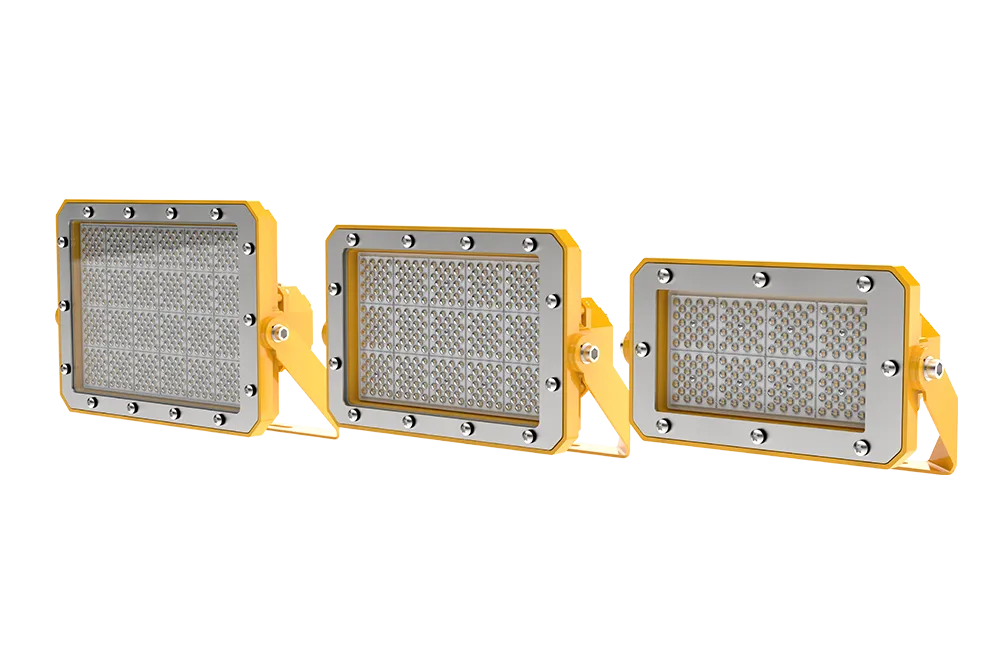
Explosion Proofed Dangerous Region Hazardous Proof} Luminaires are intentionally fabricated lighting devices built to act safely within likely volatile sites. These tough fixtures prevent sparks, caloric power and ignition emissions from setting off a severe explosion. They normally incorporate state-of-the-art designs, including specifically enclosed housings and constitutionally safe electronic devices to maintain safety standards in businesses like oil & flammable gas processing, manufacturing plants, ore processing operations, and drug production.
Identifying the Right Flameproof Lighting for Unstable Locations
Choosing the most appropriate hazard-resistant sources for a specific controlled region demands in-depth scrutiny. Aspects such as the type (e.g., Class I, II, or III and sections 0) must be carefully examined to ensure observance with related safety codes. Additionally the area's typical perils, weigh environmental elements, encompassing degrees and moisture, to identify a strong and non-hazardous method. Always check a trained technician to direct your resolution.
Locations Where Apply Explosion Proof Lights?
Explosion-proof otherwise named intrinsically safe|hazardous location|Class-rated} lights are essentially needed in specific areas where dangerous vapors or particles could probably create a risky atmosphere. This normally includes industrial fabrication plants, paint application areas, flour handling facilities, and sewage treatment areas. Regulations, such as those from IEC and NEC, mandate their setup in these sites to reduce the risk of flames and protect security stability.
Gains of Crystal-Based in Detonation Safe Systems
Embracing Crystal-Based technology for hazloc systems offers a striking collection of pros. First, photon emitters boast a considerably longer service life compared to traditional vapor lamps, reducing handling payments and pauses. They are also basically safer, producing diminished warmth which minimizes the hazard of fire outbreaks in risky atmospheres. In addition, LEDs are markedly energy saving, leading to minimized power expenditures and a shrunk green impact. Finally, the strong make of Solid-State Lighting fixtures sustains the extreme conditions typical of ignition-resistant areas.
- Prolonged Lifespan
- Lessened Servicing Disbursements
- Boosted Security
- Curtailed Electricity Expense
- Boosted Durability
Controlling and Evaluating Explosion Proof Lighting Systems
Routine tuning and full examination of detonation-proof lighting installations are necessarily important for affirming explosion proof lamps operational integrity and curbing potential risks. This covers a scheduled review of all pieces, such as fixtures, pipes, wiring, and affiliated junction boxes. Especially, assess for degradation, physical defects, and proper earth connection. Also, ascertain that whole notices are visible and that the lighting fixtures observes required protocols.
- Complete external assessments.
- Inspect wire interfaces.
- Validate detonation resistance.
Emerging of Explosion Proof Lighting Technology
The evolving landscape of explosion-proof illumination technology presents a remarkable shift from traditional designs. Future tools will broadly incorporate intelligent capabilities, enabling distant monitoring, diagnostics, and programmable control. We predict a broadening adoption of photon-emitting technology, not only for its basic energy efficiency, but also its competence to facilitate mounted sensors for detecting hazardous conditions. Moreover, materials investigation is pushing innovations in resilient shell materials, allowing for reduced weight and improved designs, while retaining the mandatory levels of hazard prevention.
- Augmented battery life for transportable applications.
- Blending with foreseeing maintenance structures.
- Design of self-maintaining lens approaches.